
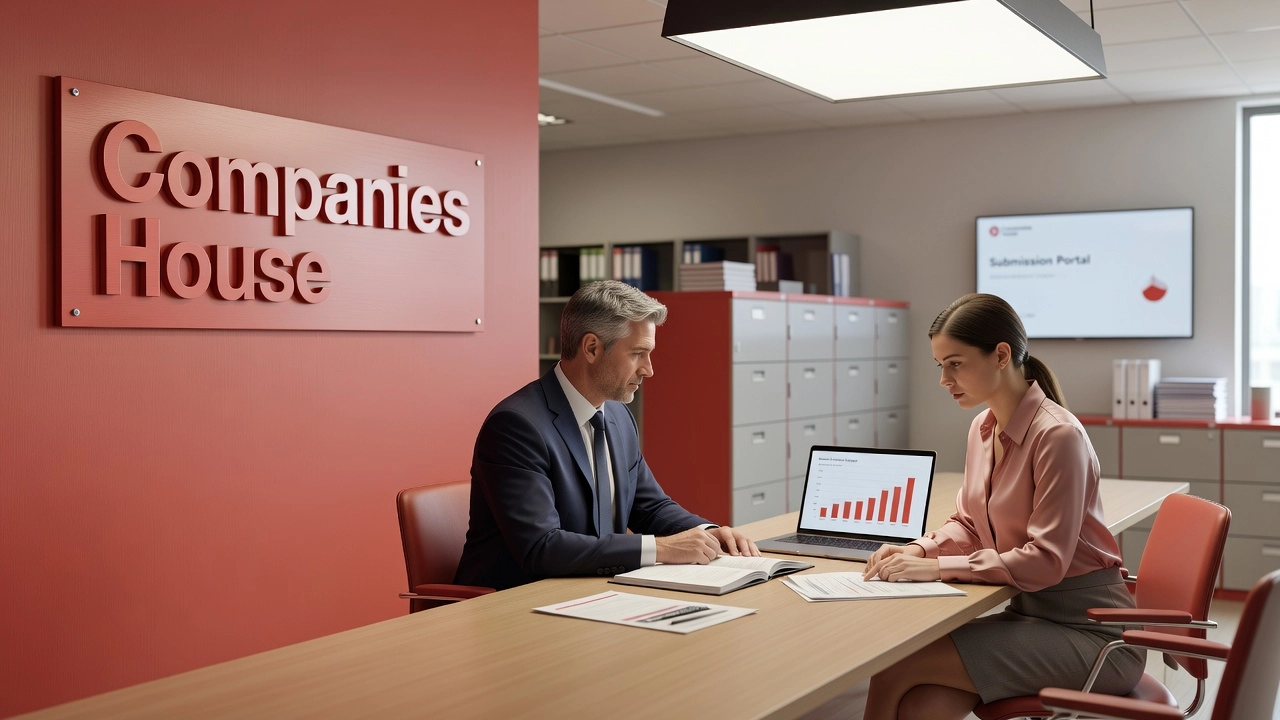
Running a limited company comes with a level of financial complexity that goes far beyond basic bookkeeping. From corporation tax obligations to dividend planning and Companies House filings, the demands can quickly become overwhelming without the right expertise in your corner.
This is where limited company accountants become an invaluable asset. More than just number crunchers, they serve as strategic partners who help business owners stay compliant, reduce tax liabilities, and make informed financial decisions throughout the year.
But not all accounting firms are created equal. Choosing the right one can mean the difference between a seamless financial operation and a stressful, costly experience. So what exactly do these specialists do, and what separates a truly great firm from an average one?
In this post, we break down the core responsibilities of limited company accountants, highlight the key services you should expect from a quality firm, and outline the defining qualities that set the best providers apart. Whether you are reviewing your current accountant or searching for one for the first time, this guide will help you make a confident, informed choice.
The Full Range of Services Limited Company Accountants Provide
Limited company accountants deliver a broad and interconnected range of services, each carrying its own deadlines, document requirements, and client communication demands. Understanding the full scope of this work helps explain why efficient, organized workflows are not a luxury but a practical necessity for any firm serving limited company clients.
1. Accounts Preparation and Filing
Every limited company must file annual statutory accounts with Companies House and a corporation tax return with HMRC. For accountants, this means collecting, reviewing, and chasing a significant volume of financial records from each client, every single year. Bank statements, invoices, expense receipts, loan agreements, and director loan account details must all be gathered, reconciled, and verified before accounts can be finalized. For a firm managing dozens or hundreds of limited company clients, this annual cycle generates an enormous volume of document requests and follow-up communication.
2. Corporate Tax Planning and Returns
Calculating corporation tax liability goes well beyond applying a rate to a profit figure. Accountants identify allowable deductions, advise on capital allowances, and help directors structure their remuneration tax-efficiently. This service typically involves multiple rounds of document exchange, draft reviews, and client approvals before the CT600 is submitted to HMRC. Directors increasingly expect proactive advice on timing and structure, not just an annual calculation, which adds an advisory dimension to what might appear to be a straightforward filing task.
3. VAT Returns
For VAT-registered limited companies, quarterly VAT returns create a continuous and predictable workload. Each return requires the accountant to collect invoices, receipts, and sales records, reconcile figures, and submit via HMRC's Making Tax Digital infrastructure. Queries arise regularly, whether over borderline VAT treatment, missing purchase invoices, or reconciling differences between bookkeeping records and bank statements. Across a client base of any size, this recurring cycle generates a steady stream of back-and-forth communication.
4. Payroll and PAYE
Running payroll for limited company directors and their employees requires accurate, timely data every single pay period. Real Time Information submissions must reach HMRC on or before each payment date, and pension auto-enrolment obligations add another layer of ongoing responsibility. Late or incomplete information from clients directly affects the firm's ability to process payroll accurately and on time, making reliable client communication essential rather than optional.
5. Company Secretarial Work
Filing confirmation statements, maintaining the statutory register, and managing director or shareholder changes are administrative tasks that attract little attention until a deadline is missed. Companies House has strict filing windows, and errors or omissions can result in penalties or, in serious cases, the company being struck off the register. Accountants providing company secretarial services must track each client's filing calendar carefully and ensure the right information is in place well ahead of each deadline.
6. Self-Assessment for Directors
Most limited company directors are required to file a personal self-assessment tax return each year. This means the accountant must gather not only dividend income and salary figures from the company records, but also any rental income, investment gains, pension contributions, and other personal financial data. The overlap between corporate and personal tax obligations means that the self-assessment process often runs in parallel with the year-end accounts work, doubling the document collection burden at the firm's busiest time of year. According to Investopedia, effective personal tax work requires a clear and complete picture of a client's entire financial position, not just the figures from a single source.
7. Ongoing Advisory Support
Beyond the scheduled deliverables, limited company directors regularly turn to their accountants for day-to-day guidance. Questions arrive informally and unpredictably, covering topics from dividend strategy and director loans to business asset purchases and growth planning. While this advisory work often goes unbilled or is absorbed into a fixed fee, it represents a substantial proportion of the total communication between a firm and its clients. As routine tasks become more automated, this advisory dimension is becoming the primary way accountants demonstrate ongoing value to their clients.
Taken together, these seven service areas create a demanding, multi-deadline environment in which document collection, client communication, and team coordination must all operate efficiently. For firms working with multiple limited company clients simultaneously, even small inefficiencies in any one of these areas can translate into missed deadlines, frustrated clients, and unnecessary administrative cost.
Why Serving Limited Company Clients Creates a Heavy Communication Load
The range of services a limited company accountant delivers does not simply add to the workload, it multiplies it. Each service area, from VAT returns and payroll to year-end accounts and director self-assessments, runs on its own deadline cycle and generates its own sequence of document requests, client approvals, and follow-up communications. A single limited company client can realistically trigger dozens of separate interactions across a calendar year. When you multiply that across a client base of fifty, one hundred, or more businesses, the volume of active communication threads becomes significant very quickly.
Without a structured system to manage these interactions, they scatter across whatever tools the team happens to use. Emails accumulate across multiple inboxes. Files are saved to shared drives with inconsistent naming conventions. Queries arrive through different channels and are answered, or missed, depending on who happens to see them first. The result is that no single team member has a complete, current view of where any given client relationship stands. Confirming whether a client has responded to a request, or finding the latest version of a document, can take longer than it should, and in a deadline-driven environment, that delay has consequences.
Missing documents are one of the most persistent sources of delay in accounting firms. Directors frequently submit incomplete information, provide the wrong tax year's records, or overlook specific items entirely. Each gap requires the firm to send a follow-up request, wait for a response, and then check whether the new submission resolves the issue or creates another question. As research into accounting service quality confirms, responsiveness and reliability are among the core dimensions by which clients evaluate their accountants, meaning every avoidable delay carries a reputational cost as well as an operational one.
Team coordination introduces a further layer of risk. When multiple people work on the same client account, the assumption that "someone else has handled it" is a genuine operational hazard. One team member may have already received a document that a colleague is still actively chasing. A client question may sit unanswered because each person assumed another had responded. As Ellis Bennett FCCA has noted publicly, fragmented communication practices are costing accounting firms clients, and the damage is both financial and reputational.
At the firm level, the cumulative effect is severe. At any given moment, a practice serving limited company clients is simultaneously managing quarterly VAT deadlines, monthly payroll runs, annual accounts, Corporation Tax returns, Companies House filings, and director self-assessments across its entire client base. These deadlines do not align neatly. They overlap, stack, and compete for the team's attention throughout the year. Firms that rely on scattered tools to manage this volume find that administrative overhead grows faster than their revenue. More clients means more complexity, not just more work, and without a structured approach, profitability erodes and the capacity to take on new business contracts rather than expands.
What Limited Company Directors Actually Expect From Their Accountant
Limited company directors are not passive clients. They carry personal legal responsibility for the accuracy of their company's filings, the integrity of its financial records, and the soundness of decisions made on its behalf. That accountability shapes what they need from their accountant, and firms that understand those expectations are far better positioned to retain clients, earn referrals, and grow profitably.
1. Fast, reliable responses
Directors running an active business cannot afford to wait two or three days for an answer to a straightforward question about their tax position, a payroll query, or a dividend decision. Slow response times consistently rank among the most cited reasons limited company directors switch accountants. Responsiveness is not a courtesy; it is a basic commercial expectation. Firms that make it easy to communicate and quick to reply remove one of the most common reasons a client starts looking elsewhere.
2. Proactive communication
The strongest client relationships are built on the accountant taking the initiative, not waiting to be chased. Directors want their accountant to reach out ahead of deadlines with clear instructions on what to prepare, what to submit, and when. A director who regularly has to ask "what do I need to send you this month?" is a director who is already questioning whether their accountant is adding enough value.
3. A clear, organised experience
Directors want to know exactly where to send documents, where to find their signed accounts, and how to check the status of outstanding work, without searching through email threads or calling the office for an update. Disorganised communication is not just frustrating; it costs directors time they do not have. A structured, accessible experience signals professionalism and builds confidence in the firm.
4. Secure handling of sensitive financial data
Limited company directors share payroll records, personal tax information, and commercially sensitive figures with their accountant. They expect that information to be stored securely and handled with complete discretion. As director responsibilities under UK company law become increasingly scrutinised, the expectation of rigorous data handling has moved from assumption to requirement.
5. Advisory value beyond the numbers
In 2026, directors increasingly expect their accountant to flag tax planning opportunities, explain the implications of a business decision, and act as a trusted commercial adviser throughout the year. Annual filing alone is no longer sufficient. Firms that offer proactive guidance on structure, profit extraction, and growth decisions create far deeper client loyalty than those focused purely on submission deadlines.
6. Consistency across the team
When a director speaks to a different member of the accounting team, they expect that person to be fully informed about their account. Being asked to resubmit documents already provided, or to explain context already given, is a significant frustration that erodes trust quickly. Consistent, well-coordinated service signals that the firm operates as a unified team, not a collection of individuals working in silos.
Meeting all six expectations simultaneously requires more than goodwill and hard work. It requires the right systems, centralised information, and a communication approach that keeps every client informed and every team member aligned.
How the Best Limited Company Accounting Firms Actually Operate
The gap between a well-run limited company accounting firm and a struggling one rarely comes down to technical knowledge. It comes down to how the firm operates day to day. The most successful firms have made deliberate decisions about how they communicate, collect information, and manage client relationships, and those decisions compound over time into a significant competitive and commercial advantage.
1. Every team member has instant access to the latest client information
High-performing firms have moved away from fragmented inboxes and shared drives toward a centralised model where the full history of every client relationship is visible in one place. When a team member needs to pick up a client call, prepare a filing, or respond to an urgent query, they should not have to search through email threads or ask a colleague where the latest documents are saved. According to research on the best software solutions for accounting firms in 2026, partners managing multiple concurrent engagements lose substantial billable hours weekly coordinating work across email and disconnected systems. Centralised communication eliminates that loss and keeps the whole team aligned.
Want to see how this works in practice? Explore Osuria’s client portal
2. Structured document collection replaces ad hoc email chasing
Sending a client a list of required documents by email and waiting to see what comes back is one of the most common sources of delay in accounting firms. The best firms have replaced this approach with organised, trackable document requests that clearly show clients what is needed and give the firm a live view of what is still outstanding. This removes ambiguity on both sides. Clients are less likely to miss items, and the firm no longer needs to send repeated follow-ups or cross-reference email chains to check whether everything has arrived. Practical strategies for managing an accounting firm consistently identify structured document collection as a distinct operational priority, not simply an extension of general email management.
3. Planned client communications keep directors informed ahead of every deadline
Rather than relying on manually triggered reminders, the best firms use planned, scheduled communications to ensure the right information reaches the right clients at the right time. For limited company directors, this means receiving timely updates ahead of corporation tax deadlines, VAT submission windows, payroll cut-off dates, and annual accounts filings. Proactive client communication reduces the risk of last-minute rushes, strengthens the client's confidence in the firm, and removes a significant source of reactive workload from the team.
4. A professional, branded client experience drives trust and retention
The client experience begins at the first interaction. Firms that deliver a consistent, polished experience signal competence, reliability, and attention to detail from day one. Directors who receive a modern, branded environment for exchanging documents and communicating with their accounting team are more likely to trust the firm's advice, refer others, and remain clients long-term. This is no longer a differentiator reserved for large practices; it has become an expectation as automation and analytics tools become standard practice among competitive firms.
5. Centralised workflows protect continuity through team changes
When a team member goes on leave or a client account transfers internally, a centralised approach ensures no knowledge is lost and no documents go missing. The client experience remains consistent regardless of personnel changes because all communication, files, and outstanding tasks are held in a single, accessible workspace rather than in individual inboxes.
6. Operational efficiency creates the capacity to grow profitably
Firms that have solved the operational challenge can serve more clients without proportionally increasing their headcount. This is the most direct route to improving profitability without compromising service quality. According to analysis of accounting practice management software in 2026, firms that build documented, centralised processes are able to deliver an enterprise-level client experience to a large client base without proportional headcount growth.
Osuria supports this model directly. By bringing client communication, file sharing, tasks, notifications, and structured document collection into one secure, branded digital workspace, Osuria gives limited company accounting firms the infrastructure to deliver a consistently excellent experience at scale, without adding administrative complexity as the client base grows.
The Digital Shift Reshaping How Limited Company Accountants Work
The UK accounting profession is changing faster than at any point in recent memory, and the pressures reshaping it are structural, not temporary.
Making Tax Digital is the most immediate driver. With MTD for Income Tax entering its first mandatory phase from April 2026, accounting firms are now required to support four quarterly digital submissions plus a Final Declaration annually for qualifying clients. That represents a significant increase in submission touchpoints per client, and it makes continued reliance on email chains, scattered document requests, and manual record collection operationally unsustainable. Firms that have not yet built structured, digital-first workflows are already feeling the pressure.
What makes this transition particularly significant is that MTD readiness and excellent client service require exactly the same operational foundation. Firms that have centralised their document collection, standardised their client communication, and organised their workflows around clear processes are not only better prepared for regulatory demands; they are also delivering a noticeably better client experience. The discipline required to collect clean records on time, every quarter, is the same discipline that builds client trust and reduces last-minute chaos. Preparing for MTD effectively means treating it as a practice-wide operational upgrade, not an isolated compliance task.
Beyond regulation, cloud technology, AI-assisted workflows, and integrated communication tools have moved from aspirational to essential. Industry figures have described 2025 as a genuine turning point in this regard, and the trajectory has continued into 2026. Automation now handles routine tasks with a level of accuracy that would have been impractical just a few years ago, freeing accountants to focus on the advisory work that clients genuinely value.
That shift matters commercially. As filing accuracy becomes a baseline expectation rather than a differentiator, the competitive advantage for limited company accountants is moving toward relationship quality, responsiveness, and the depth of insight delivered to clients.
Limited company directors are also raising their expectations around how information is exchanged. Accustomed to secure digital experiences in banking, legal services, and HR, many are increasingly uncomfortable sending sensitive financial documents by email. Firms that offer a secure, organised, and professional digital experience are not simply meeting a preference; they are signalling a level of professionalism that strengthens the client relationship from the outset.
Firms investing now in centralised information and standardised client communication are building infrastructure that scales. The firms best positioned for long-term growth are those treating digital operations as a platform, not just a response to immediate workload.
What to Look For When Choosing a Limited Company Accountant
Not all limited company accountants offer the same scope of service, and the gap between them is more consequential than many directors realise. Here are six practical criteria to apply when making your decision.
1. Full-service coverage across all your obligations
A limited company creates multiple filing obligations that do not exist for sole traders, including corporation tax, VAT, payroll, company secretarial work, and director self-assessment. Your corporation tax return and your personal self-assessment are separate filings with separate deadlines, and not every firm handles both as standard. Look for a firm that covers the full range under one roof, so you are not coordinating between multiple advisers or managing handoffs between providers.
2. Proactive communication rather than reactive silence
Ask the firm directly how they manage deadline communication. A well-run practice reaches out ahead of key dates, telling you what information is needed and when. A poorly run one waits until you chase them. Consistent, structured communication reduces the risk of missed filings and saves you significant time throughout the year.
3. Secure document exchange as standard
Sharing sensitive financial records by email carries real risk. A firm that uses a structured, secure digital workspace for document exchange demonstrates stronger professional standards and protects both parties. As data security expectations rise, this is increasingly a baseline requirement, not an optional extra.
4. Technology that gives you visibility
A practice that has invested in modern tools can respond faster, keep records better organised, and give you a clear view of where your work stands. With Making Tax Digital shaping how firms operate, technology readiness is now a practical requirement, not a preference.
5. Ongoing advisory engagement
Poor cash flow management is one of the most commonly cited reasons businesses fail. An accountant who engages with your business throughout the year, not just at year-end, is positioned to help you avoid exactly this outcome. The most valuable limited company accountants act as a financial partner, not just a filing service.
6. Reputation built on long-term client relationships
A firm with a strong record of client retention signals consistent delivery, clear communication, and genuine advisory value. Ask how long their typical client relationships last. Longevity is one of the most reliable indicators that a firm delivers what it promises.
Building a Better Service for Limited Company Clients
Limited company directors carry recurring obligations across the full year, from VAT quarters and payroll runs to corporation tax filings and year-end accounts. The firms that serve them most effectively are not necessarily those with the largest teams. They are the firms that have solved the underlying operational challenge: centralised information, structured document collection, and proactive client communication that keeps every engagement on track.
Digital-first operations are not a future ambition in 2026. They are the current standard that competitive firms are already working to. Directors increasingly expect the same digital convenience from their accountant that they experience in other professional services: fast responses, clear requests, and secure document exchange without the friction of scattered emails and shared drives.
The answer for growth-focused firms is not additional headcount. It is building operational infrastructure that allows the existing team to deliver more, with fewer errors and less back-and-forth. When every client file, conversation, and document request lives in one place, the team moves faster and the client experience improves without extra effort.
Osuria provides exactly this foundation. As a secure, branded digital workspace, it centralises client communication, file sharing, tasks, and structured document collection, giving limited company accountants the tools to grow their client base without increasing administrative workload. Planned client communications keep directors informed at every stage, reducing the need for manual follow-ups and reactive responses.
If your firm is ready to deliver a more professional client experience and operate more efficiently, Osuria is built for precisely that.
Conclusion
Running a limited company demands more than basic financial admin. The right accountant handles your corporation tax, dividend planning, and compliance obligations while actively helping you grow and protect your business. Beyond technical expertise, a truly great firm offers proactive advice, clear communication, and a genuine understanding of your goals.
The key takeaways are simple: specialist knowledge matters, the range of services should match your needs, and the firm's values should align with yours. Settling for less can cost you far more in the long run, both financially and in peace of mind.
If you are ready to take control of your company's finances, start by evaluating firms against the standards outlined here. The right accounting partner is not just an expense; it is one of the smartest investments your limited company can make.